


 Aug. 25, 2026 – Climate Change Connection
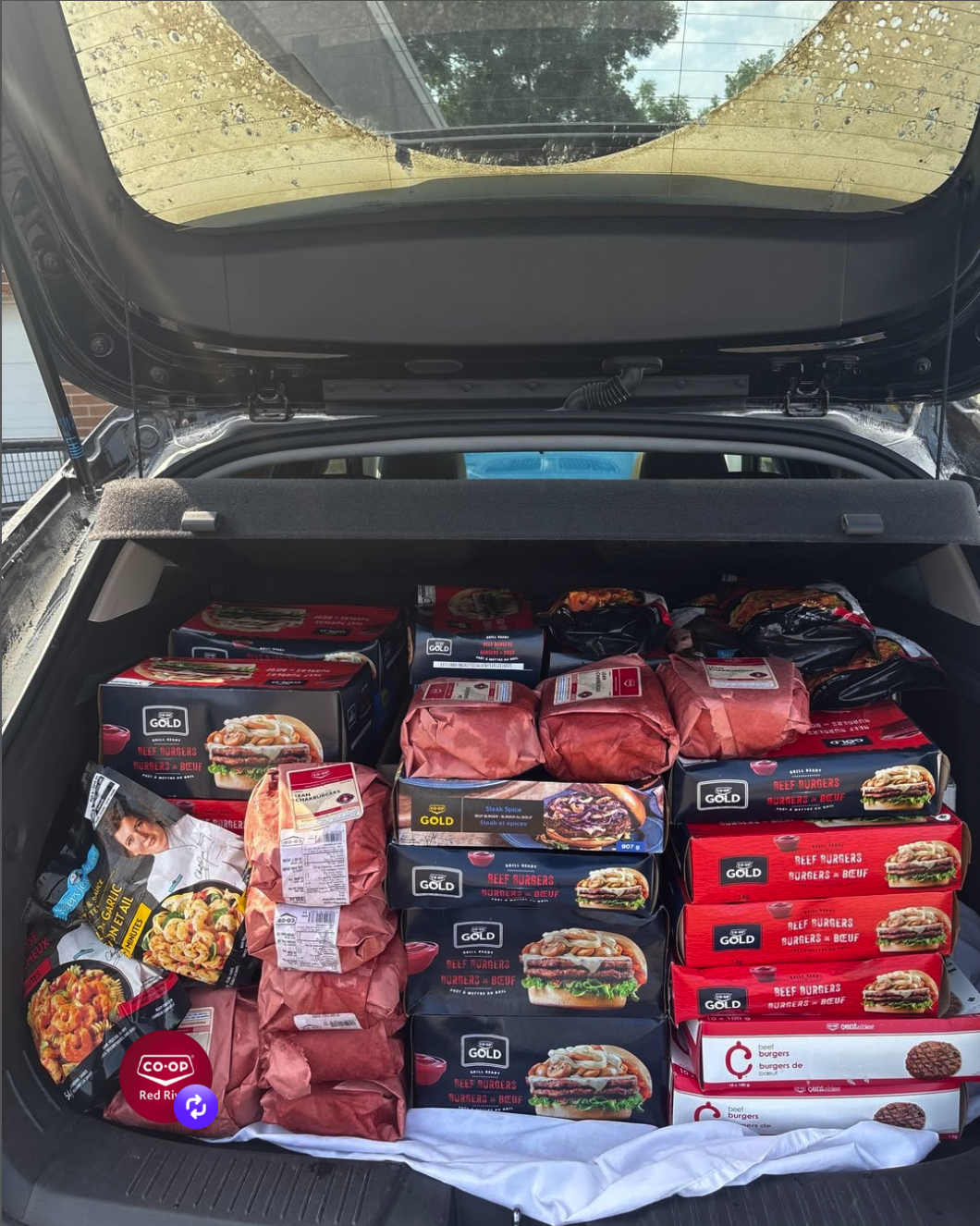
When extreme weather knocked out power in southwest Winnipeg this summer, a local Red River Co-op suddenly had a problem: about 600 pounds of frozen meat needed to be moved—fast.
Instead of going to landfill, it went to people who could use it.
“When we received the call from Red River Co-op, we knew we needed to act quickly,” says Maribel Abrenica of the Leftovers Foundation. “Having volunteers and community partners ready to respond meant we could redirect the food instead of seeing it go to waste.”
A Leftovers volunteer transported the donation to both the Native Clan Organization and Chalmers Neighbourhood Renewal Corporation. At Chalmers, two 40-foot refrigerated containers provided the cold-storage capacity needed to safely receive and store a large portion of the donation until it could be distributed to the community.
“Having cold storage meant we could say yes,” says Leilani Esteban Villarba of Chalmers Neighbourhood Renewal Corporation. “We could safely store the food and make sure it reached people in our community who needed it.”
This is what food-system resilience looks like.
Climate Change Connection is helping coordinate the Manitoba Food Recovery Network to strengthen the connections between food recovery organizations and build the infrastructure needed to respond when surplus food becomes available.
That infrastructure matters for more than food security.
Food sent to landfill produces methane, a powerful greenhouse gas, while also wasting all the land, water and energy that went into producing it. At the same time, climate-driven extreme weather, wildfires, floods and power outages are putting increasing pressure on food systems and supply chains.
That’s why cold storage, refrigerated transportation and a coordinated response network should be considered critical infrastructure.
Food recovery is climate action. It’s emergency preparedness. It’s food security. And it’s community resilience.
Government and industry need to help invest in it.
Because when the power goes out or supply chains are disrupted, the ability to safely store, move and redistribute food isn’t just about preventing waste. It’s about keeping communities fed and that helps make a resilient food system.
Learn more about the Manitoba Food Recovery and Emissions Reduction project.